2026 INDUCTEE – NATHANIEL HOLMES
By David Elwell
The Decatur Daily
Honoring a sports trailblazer
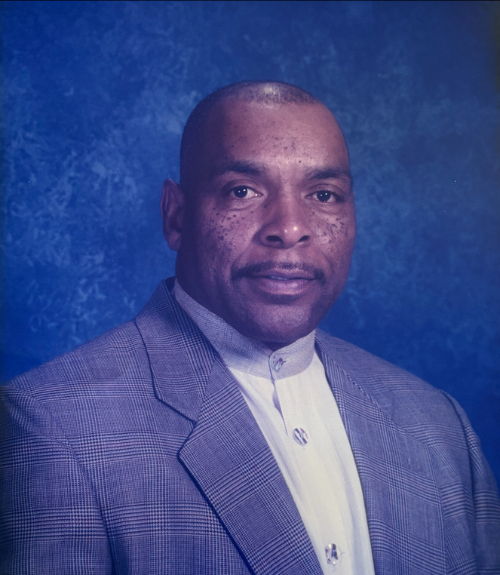
Nathaniel Holmes has been a “first” many times in his life.
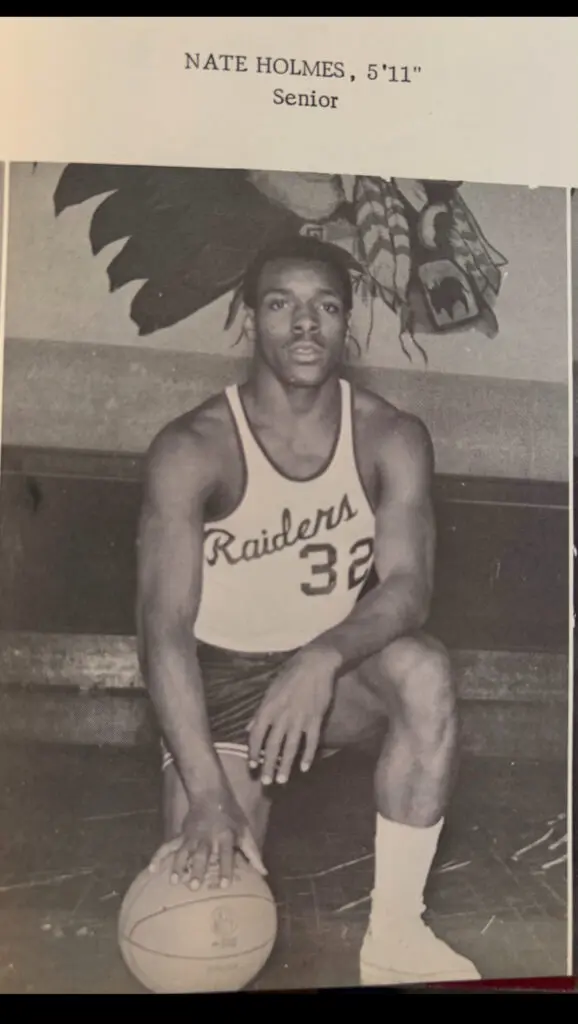
He was one of the first Blacks to play football and basketball at Decatur High in 1967.
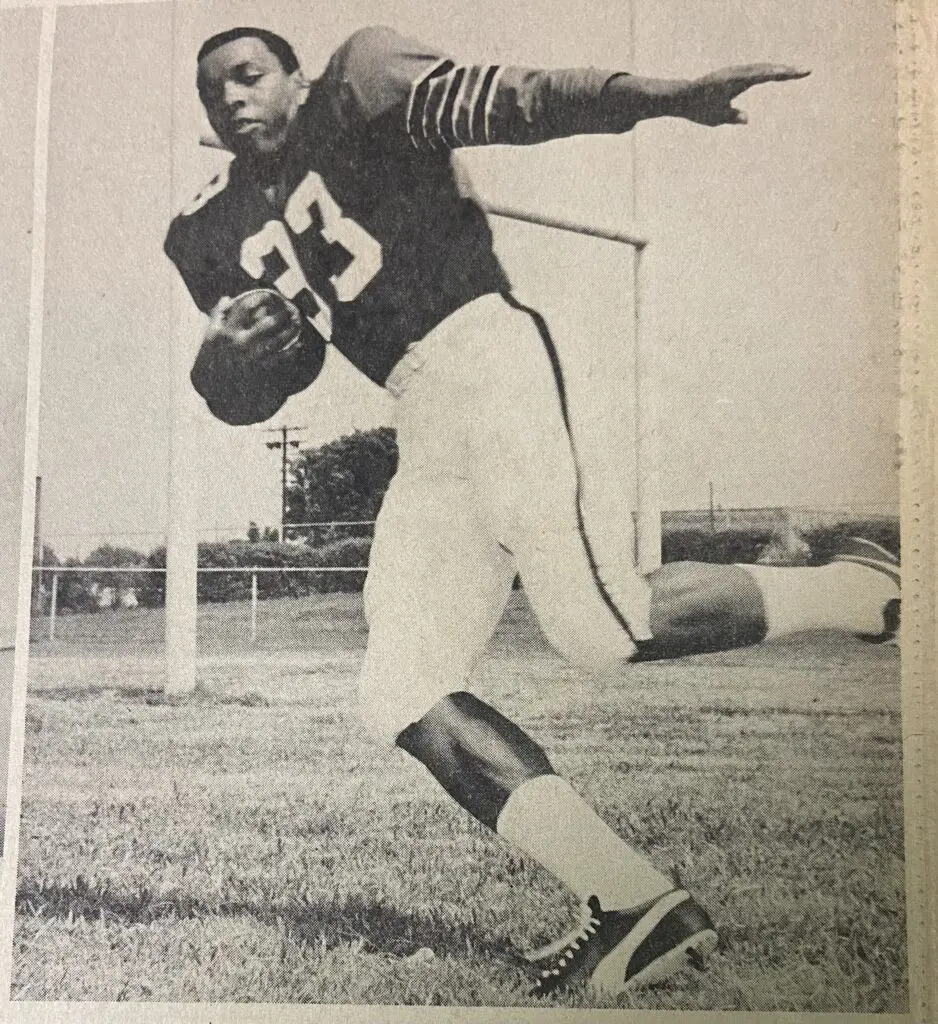
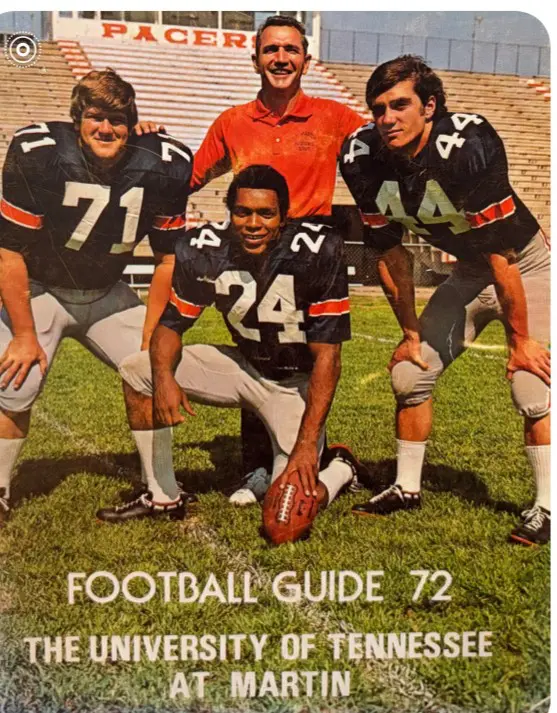
Holmes was also one of the first Black football players at the University of Tennessee at Martin in 1969. The next season he was the only Black on the team.
After his athletic career ended, Holmes was hired by the Weakley County School System in Martin, Tennessee. He was not the first black teacher or black coach hired by the school system. He was just the second.
Following a long coaching career, Holmes was the school system’s first Black assistant principal and later the first Black principal.
“I’m proud to say that I’ve been a “first” many times in my life,” Holmes said. “I’m also proud to say I’m a Decatur High graduate. If I didn’t go to Decatur High, I’m not sure I would have had those opportunities.”
Holmes, 75, is a member of the Morgan County Sports Hall of Fame Class of 2026. The induction banquet is June 20 at Decatur’s Cook Museum of Natural Science.
Holmes grew up on Lafayette Street in northeast Decatur. Claude Stevenson lived across the street. They have been best friends since the day they met.
“Growing up we were like two peas in a pod,” Stevenson said. “We did everything together. We even double-dated together.”
One of the places they went together was Lakeside School, the school for Blacks in Decatur.
“When I was in elementary school my dream was to be a drummer in the Lakeside band,” Holmes said.
The education scene changed a lot during Holmes’ childhood. In 1954, the U.S. Supreme Court ruled in Brown vs. Board of Education that separating children in public schools on the basis of race was unconstitutional. In 1963, a Federal court ordered Alabama to integrate its public schools.
In 1966, Decatur City Schools gave Blacks freedom of choice. That meant Blacks could leave Lakeside for either Decatur or Austin. Since Decatur City Schools provided no transportation, it would be up to the students to provide their own way to school.
In 1967, Earl Webb was hired as the new head football coach at Decatur. That led to six athletes from Lakeside making the move to Decatur. They were Holmes, Stevenson, Frederick Outlaw, Donnell Parker, Bobby Joe Pride and Rick White.
Actually, Holmes was returning to Decatur to finish high school after attending Nashville Christian Institute in Tennessee. NCI was a primary and secondary school for Blacks supported by the Churches of Christ and had close ties to Lipscomb University.
Several of Holmes’ older siblings attended NCI with scholarship support from area Churches of Christ. His brother Tandy later played basketball at Pepperdine University, another Churches of Christ school.
“NCI closed after my sophomore year and I was going to have to finish high school in Decatur,” Holmes said. “I was set to finish at Lakeside, but when Claude said he was going to go to Decatur I decided to go with him.”
Holmes played for three Hall of Fame coaches at Decatur in Webb, Earl Morris for basketball and H.L. “Shorty” Ogle for track.
“It was a great experience to be coached by all three of them,” Holmes said. “Decatur had great football and basketball programs and we wanted to be a part of it. Everybody at Decatur was good to us. Getting to join the football team in the summer let us make some friends before we started school.”
Holmes’ first season at Decatur was also his first time to ever play football. He was primarily a backup running back to Pride, who was the team’s top player before injuries slowed him down. Pride would go on to star at what is now the University of North Alabama. He was inducted into the Morgan County Sports Hall of Fame in 2018.
“The only football I had played was at the school yard where someone would pick up the ball and everybody else would try to tackle him,” Holmes said.
Holmes and Stevenson were the first two Blacks to play basketball at Decatur. In their first River City Rivalry matchup with Austin, Stevenson scored 16 points and Holmes scored 12. They each had 10 rebounds.
“I didn’t always agree on everything with Coach Morris, but I learned a lot that helped me become a better coach,” Holmes said. “Several years later he told me that everything came so easy for me that I didn’t push myself hard enough.
“When I was coaching I had some players like that. That helped me understand Coach Morris even more as a coach than when I played for him.”
Holmes was part of a pretty stout 440-relay team for Ogle’s track program. Joining Holmes was Stevenson, Pride and John Rice. Pride set the pace on the first leg and Holmes was the anchor.
Decatur went 4-5-1 in Webb’s first year as head coach in 1967. Expectations were high for 1968 and a big part of that was Holmes. He was getting bigger, stronger and faster. By the time he played at Tennessee-Martin, Holmes was 5-foot-10, 190 pounds.
“Nate walked slow and talked slow, but when he got on the football field he was anything but slow,” Stevenson said. “He had a body like a bodybuilder, but he never lifted a weight. He was just an outstanding athlete.”
Holmes’s senior season in 1968 was not a good season for the Red Raiders. They posted a 2-7-1 record. The offense scored just 103 points and 54 of those points came in a 21-0 win over Hartselle and a 34-0 win over Walker.
“It was really disappointing. I wanted to have a great season and be heavily recruited,” Holmes said.
Instead the recruiting offers were Jacksonville State and Troy. Tennessee and Kansas State offered him an opportunity to walk on, but that wasn’t financially possible.
“I really wanted to go to SMU and be the next Jerry LeVias,” Holmes said. “He was my favorite player. LeVias was a pioneer and I wanted to be a pioneer, too.”
LeVias (5-9, 177) set the college football world on fire in 1966 with his blazing speed at receiver for SMU. The first Black to play in the Southwest Conference led the Mustangs to their first conference championship in 20 years. LeVias inspired the Mustangs with key touchdowns in wins over rivals Texas, Texas A&M, Baylor and TCU.
Holmes decided to cast his lot with Tennessee-Martin. UTM was a member of the Gulf South Conference along with Jacksonville State, UNA and Troy.
“They recruited Phillip Pisani, my teammate at Decatur,” Holmes said. “I thought it would be good to go where I knew somebody.”
Holmes was one of seven Blacks in the UTM freshmen class. Most of them were from out of state, including Nat Moore from Florida. Moore left after his first year at UTM and eventually became an All-SEC running back for the Florida Gators. He later was a star receiver in the NFL for the Miami Dolphins.
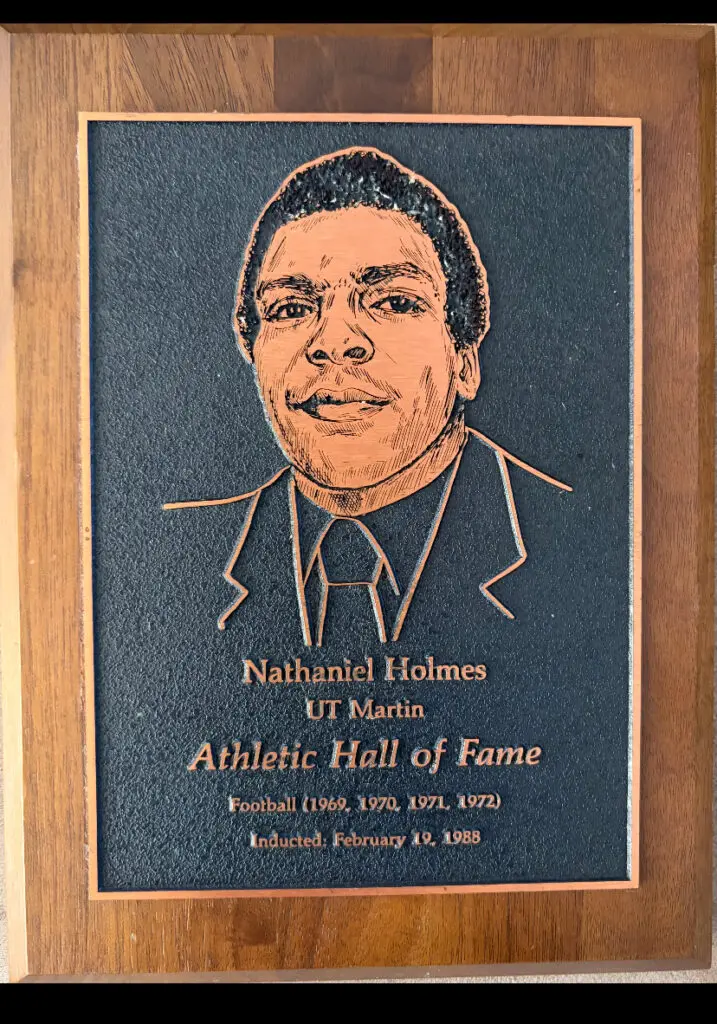
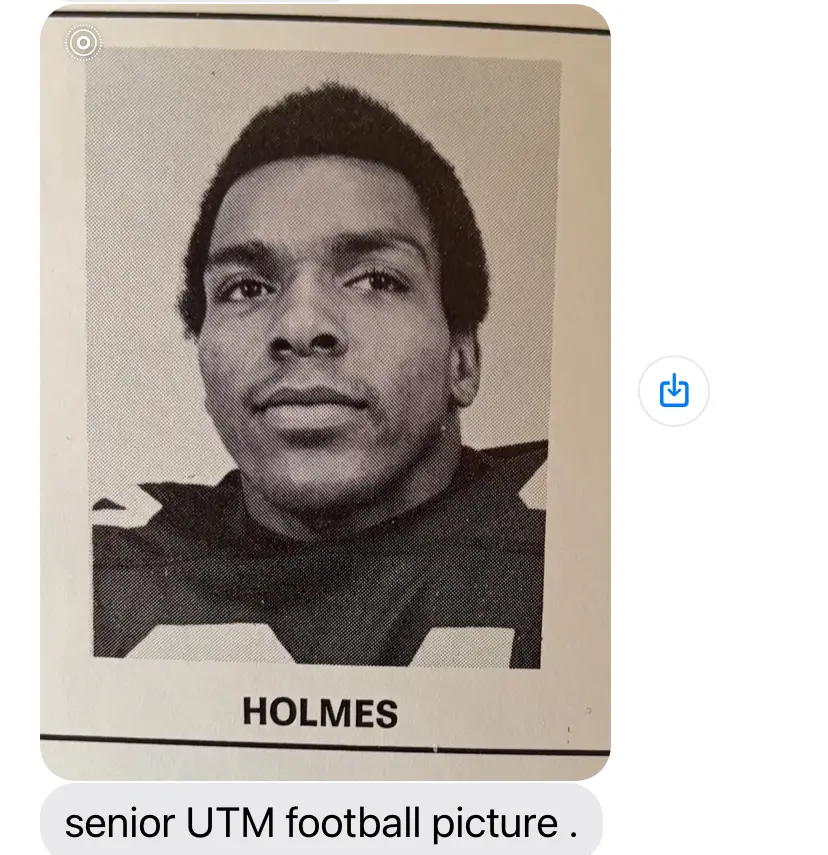
Holmes was the only Black on the 1970 UTM football team. The pioneer was determined to make the best of the situation with head coach Robert Carroll. UTM went a combined 13-17 in Holmes’ final three seasons. He rushed for 2,005 yards, including 1,400 yards with 14 touchdowns in his final two seasons.
The rushing numbers still rank Holmes as one of the top running backs in school history. He was named to the 1971 NAIA All-American team. Holmes was named UTM’s Most Valuable Back for three seasons and was team co-captain in 1971.
“My last year at UTM I injured an ankle and really didn’t have the senior season I wanted,” Holmes said. “The Kansas City Chiefs had a scout who visited UTM a lot. That was back when Mike Garrett was a star running back after winning the Heisman Trophy at USC.
“I met Garrett one time when I was visiting my brother in California. He was about my size (5-9, 190) and I thought if he could play in the NFL, I could, too.”
Holmes’ NFL opportunity came as a free agent signee with the Miami Dolphins. The Dolphins under head coach Don Shula were on their way to becoming a NFL powerhouse. They would win back-to-back Super Bowls in 1972 and 1973. They were stacked at running back with stars like Mercury Morris and Larry Csonka.
“I think Shula liked what he saw from me,” Holmes said, “but it was just impossible to make it with the Dolphins. He tried to get me to play for a minor league team, but I wanted to play in the NFL.”
Holmes went to camp with the Houston Oilers and later got a call from a team in the Canadian Football League.
“Pro football just never worked out for me,” Holmes said. “I have no regrets.”
Holmes’ wife, Cathie, is a native of Martin, Tennessee, and it’s been his home ever since he left Decatur. After a stint as a graduate assistant coach at UTM, Holmes was hired as a teacher and coach at Martin’s Westview High School.
“When you are first hired to be a coach, you coach anything they want you to coach,” Holmes said. “I coached football, basketball, softball and track. I enjoyed every minute of it.”
Holmes was assistant principal at the high school for eight years. Then he moved to Martin Middle school as principal for 27 years in which the school received numerous honors for academic success. After 43 years, he retired from education in 2018, but became a volunteer coach for football and basketball. One of the star athletes he coached in middle school was future Alabama quarterback Ty Simpson.
“He’s a great young man who comes from a great family,” Holmes said. “His father (Jason Simpson) is the head football coach at UTM. I know him well.”
In the last couple of years, Holmes cut back on his volunteer coaching duties down to just basketball at Westview. It was a big year for varsity teams at Westview. The football team, led by Ty’s brother Graham at quarterback, won the state championship. The basketball team fell just short in the state playoff finals.
For the man who had so many “first” in his life, Holmes said this basketball season may have been his last.
“It’s probably time to stay home and spend more time with my wife,” Holmes said.