2026 INDUCTEE – KENNY COLE
By David Elwell
The Decatur Daily
Honoring a Red Raider football great
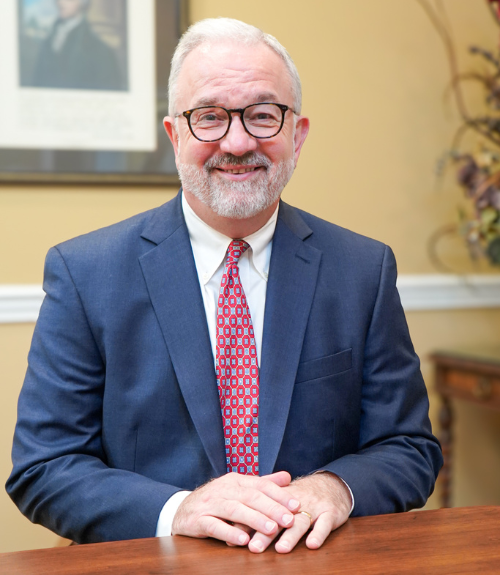
For much of Kenny Cole’s young life, he was an Army brat moving around from place to place following the military career of his father.
When his father, Kenneth Cole, decided to retire from the military, he and his wife Evelyn decided to settle in their home state of Alabama. That brought them to Decatur in 1973.
“I had three older sisters, who never went to just one school while they were in high school,” Cole said. “I was fortunate to get to spend all four years of high school at Decatur.”
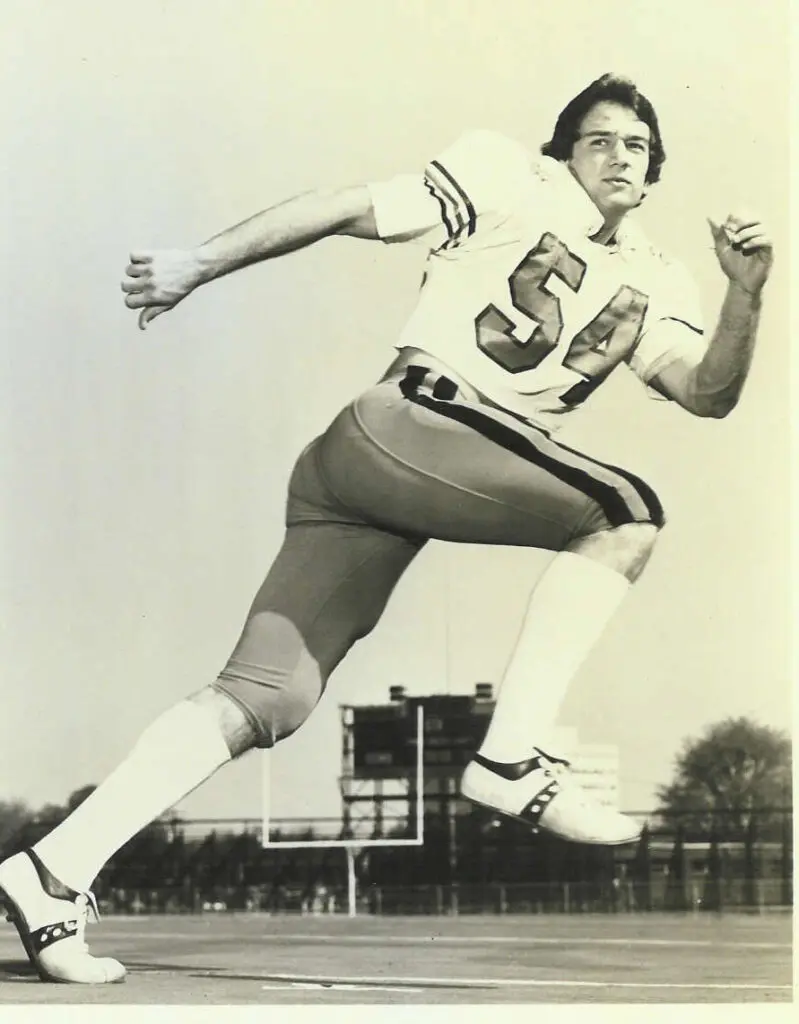
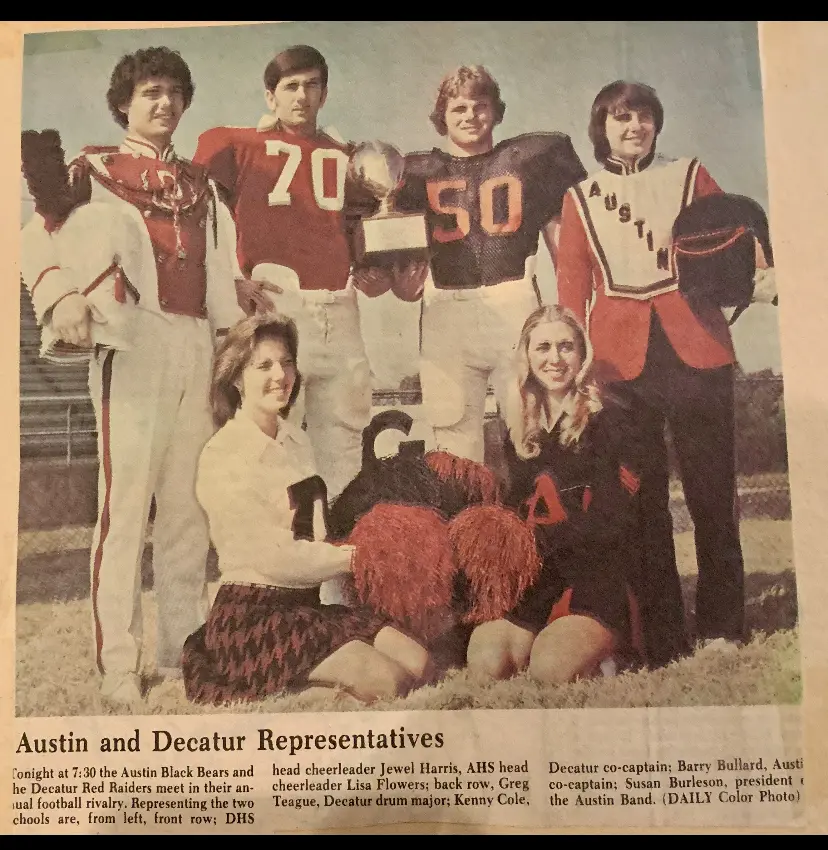
Cole’s time at Decatur High was marked by academic and athletic success. He was a valedictorian in the Decatur High Class of 1977. His football skills earned him All-State and All-American honors. He continued his football career at Vanderbilt and earned a law degree from the prestigious university in Nashville.
“My years in Decatur probably had the greatest impact on my life,” Cole said. “I actually only lived in Decatur the four years I was in high school, but I still consider it my hometown. It still has a special place in my heart.”
The 1970s were a grand time for athletic success at Decatur High thanks to two Hall of Fame coaches who shared the first name Earl. In 1970, Earl Morris coached the boys basketball team to a state crown. In 1971, Earl Webb coached the football team to a state championship.
In 1973 when the Cole family moved to Decatur, the Red Raiders’ state championship success was still being celebrated. The community was hungry for the next state championship.
“That summer after we moved to Decatur, Dad met with Coach Webb and told him he had a son who wanted to play football,” Cole said. “Coach Webb told him to send me up there for the summer workouts. I was actually part of the football team before I even started school. I also made a lot of new friends that summer. That made it a lot easier to start at a new school.”
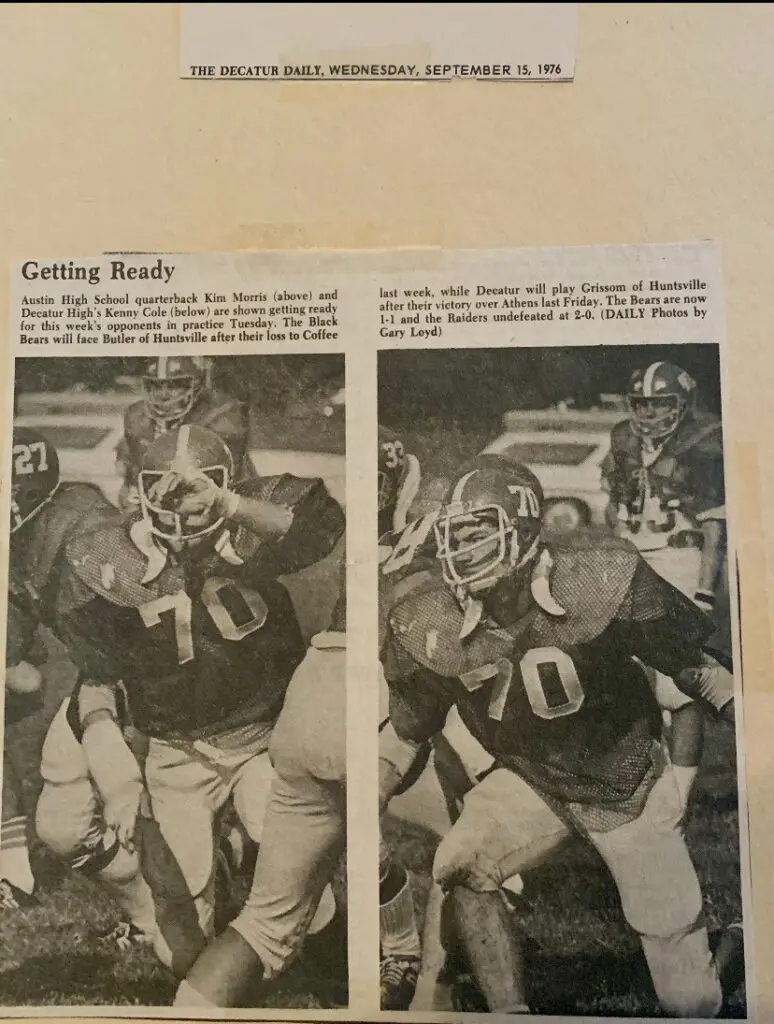
Cole found his spot on the football field on defense directly across from the center at the nose guard position. It was perfect place for Cole to use his size (6-foot-1, 190 pounds), strength and quickness to disrupt the offensive attack, which in those days was predominately running the football.
“Kenny was just a special player,” said Bryce McCreless, who played defensive tackle for the Red Raiders. “Before each game, he would say “Meet you at the quarterback” and we would. He could really blow up the offense.
“I remember when Kenny got his starting spot. He was a sophomore. Somebody got injured against Scottsboro and Kenny came into the game. He did so well that he stayed in the starting lineup. That was when it was rare for a sophomore to play any on the varsity.”
After a 5-5 season in 1974, expectations were high in 1975 for the Red Raiders with a veteran defense led by Cole, now a junior.
“I was the backup center for three years and had to go against Kenny every day in practice,” said Chuck Thompson. “That meant I was the recipient of his forearm every day for three years. He was a hard worker who refused to lose.”
Cole’s work ethic was legendary. After a hard day of practice that ended with the team running sprints, Cole would move to the track for more running while most of his teammates headed to the locker room and prepared to go home.
“My Dad told me that after practice, if I couldn’t look at myself in the mirror and say I got better that day, that I needed to do something extra to get better,” Cole said.
While many of his teammates had taken showers and were headed to the parking lot, they could see Cole still on the track. On many days some teammates would join him in the trips around the track.”
“I might have run with him a few times, but I usually had done all the running I wanted to do that day on the practice field,” McCreless said. “He was just a determined person who was built a little different from the rest of us.”
Cole said the laps around the track really did make him a better player. It helped his endurance.
“Those laps paid off in the fourth quarter,” Cole said. “I was still going 100 percent.”
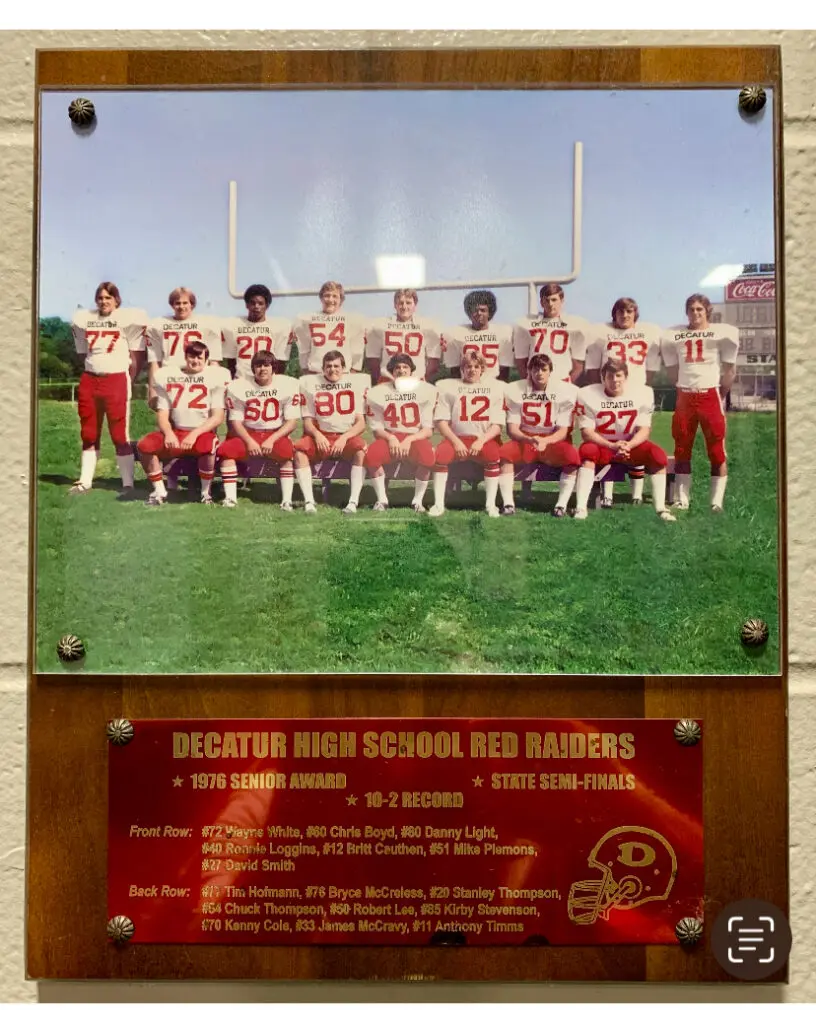
The 1975 Red Raiders went 7-2-1. The defense allowed just 98 points. The two losses were by a total of 13 points. That was enough to keep Decatur out of the playoffs that season.
Missing the playoffs in 1975 helped serve as an incentive for the 1976 team in Cole’s senior season.
“Not many people expected us to be good our senior season,” offensive lineman Mike Plemons said. “The guys before us were supposed to be the team. We were not a big team, but we played hard and Kenny was our leader.”
Cole was known for being easy going off the field, but his personality changed in the locker room before a game.
“Kenny would get all excited trying to pump everybody up,” said offensive lineman Tim Hofman. “That worked for a lot of the guys, but some guys had rather wait until the game actually started to get excited. They would hide in the bathroom to get away from him.”
The 1976 Decatur season opened with a road win at Bradshaw, 20-6, and a home opening victory over Athens, 14-8. The third game was a region battle in Huntsville vs. Grissom. It was a scoreless battle until Decatur’s Stanley Thompson returned a punt 79 yards for a touchdown with 22 seconds left for a 7-0 victory.
Old rival Hartselle visited Ogle Stadium the next week. It was expected to be a close battle. Decatur had won the season before 7-0 in overtime. The 1976 game would also be an overtime contest. This time it was Hartselle winning 7-6. Decatur lost six fumbles and had a pass intercepted.
“I think that loss made us more determined,” Cole said. “We knew we were a better team than that.”
The Red Raiders bounced back to win their next six games to take the Class 4A, Region 11 championship. The defense allowed just 42 points in the 10 regular season games. There were four shutouts. Athens’ eight points was the most allowed in any of the regular season games.
One of the most impressive performances was in the region-clinching 21-0 victory over Johnson. The Jaguars were stonewalled to zero yards rushing. The effort brought praise from Earl Webb.
“I am really proud of this defense,” the head coach said. “I feel we can put them on the field with any team in the state and represent Decatur High proudly.”
The region championship gave the Red Raiders a first-round bye in the state playoffs. The second-round opponent turned out to be rival Butler. The Rebels shocked the Red Raiders with two quick touchdowns to take a 14-0 advantage in the game played in Huntsville.
Decatur cut the lead to 14-7 on a Darnell Shackelford touchdown run with 54 seconds left in the first half. The Red Raiders took the ball first in the second half and marched 63 yards in 13 plays to tie the contest at 14-14. Decatur would score the game-winning touchdown with 1:14 left for the 21-14 victory.
The next challenge for Decatur was a semifinal contest at home vs. defending state champion Mountain Brook. The Spartans entered the game on a 25-game winning streak. Their offense featured one of the top running backs in the country in Major Ogilvie, who had rushed for 1,897 yards and 24 touchdowns.
Decatur’s offense was led by junior quarterback Benny Perrin. Ogilvie and Perrin would later become teammates at Alabama and play on national championship teams in 1978 and 1979.
The showdown at Ogle Stadium on the Friday night after Thanksgiving was played on a muddy field.
“I remember that on the first play of the game Mountain Brook had the ball,” Cole said. “The call was for the defensive line to shift together one way. Ogilvie got the ball and I got a clean shot at him.
“I hit him under his chin and drove him backwards into the mud. “I told him, ‘It’s going to be like this all night long.’”
Unfortunately, it didn’t quite work out as planned. Ogilvie rushed for 240 yards with two touchdowns for 50 and 56 yards. One of those TD runs came late in the first half.
“It seemed like Mountain Brook had all the momentum after that run,” McCreeless said. “Any time I watch a game on TV and see a team score late in the first half, I think of our game with Mountain Brook.”
Decatur actually took the lead back at 20-17 in the third quarter on a 63-yard run by Stanley Thompson. Mountain Brook went ahead 24-20 in the fourth quarter, but Decatur still had a chance late to win the contest.
The Red Raiders had first down at the Mountain Brook 2 with 1:10 left to play. Four plays failed to cross the goal line.
“I truly believed we were going to win that game,” Cole said. “It was a heck of a game between two great teams. I’ll never forget it.”
The sting of the loss got even deeper the next week when Mountain Brook thumped Murphy, 52-26, in the Class 4A state championship game.
Cole’s numbers in his senior season totaled 47 tackles, 69 assisted tackles, nine sacks and six caused fumbles. Accolades followed with All-State selections by both the Birmingham News and Post-Herald. He earned a Super All-State selection and All-American honorable mention.
“Kenny Cole had all the intangibles that any football coach would look for in a player,” said Steve Rivers who was a young assistant coach for the 1976 Red Raiders. “Kenny was a favorite of all the coaches because he wanted to be the best at everything he did. He just had that ‘it’ factor that made him a really great player.”
The football career for Cole continued in college at Vanderbilt with the Commodores. A position change moved him from nose guard in high school to linebacker in college.
“Playing college football got me thinking that maybe I could play in the NFL one day,” Cole said.
Cole’s aggressive warm-up routine followed him to Vanderbilt. Vanderbilt would warm up and then head back to the locker room before hitting the field again shortly before kickoff.
“There was one game where we were back in the locker room and one of my friends noticed my helmet was cracked,” Cole said.
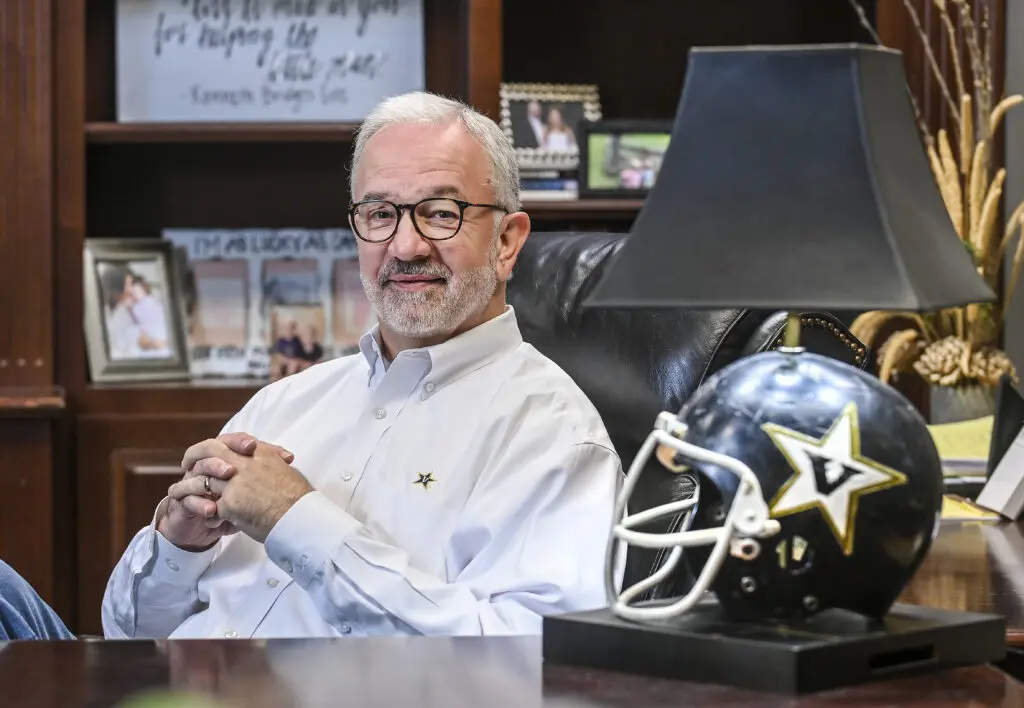
The cracked helmet was saved. Now it’s a lamp on Cole’s desk at his law office.
Following his sophomore season, Cole was named to the SEC All-Academic team. Later that year a severe back injury while working out brought his football career to an end.
“I went to Vandy to major in English and become a high school football coach,” Cole said. “After I got there I decided to go to law school. Vanderbilt Law School opened a lot of doors for me”
Cole’s law career began with a prestigious corporate firm in Houston. After a few years, Cole decided to switch to the other side of the table to represent clients in litigation against companies like the ones he had represented.
“When I played at Vanderbilt, we were always the underdogs of the SEC,” Cole said. “You could tell it in the fourth quarter against a team like Alabama. They would have a third stringer in the game trying to block me to impress Coach Bryant. They came into the game fresh and I was tired from having played 80 snaps.
“That experience taught me to be at my best in the fourth quarter. He gave me the mindset to do what I do today for a living. I have to be ready to compete every day for my clients.”