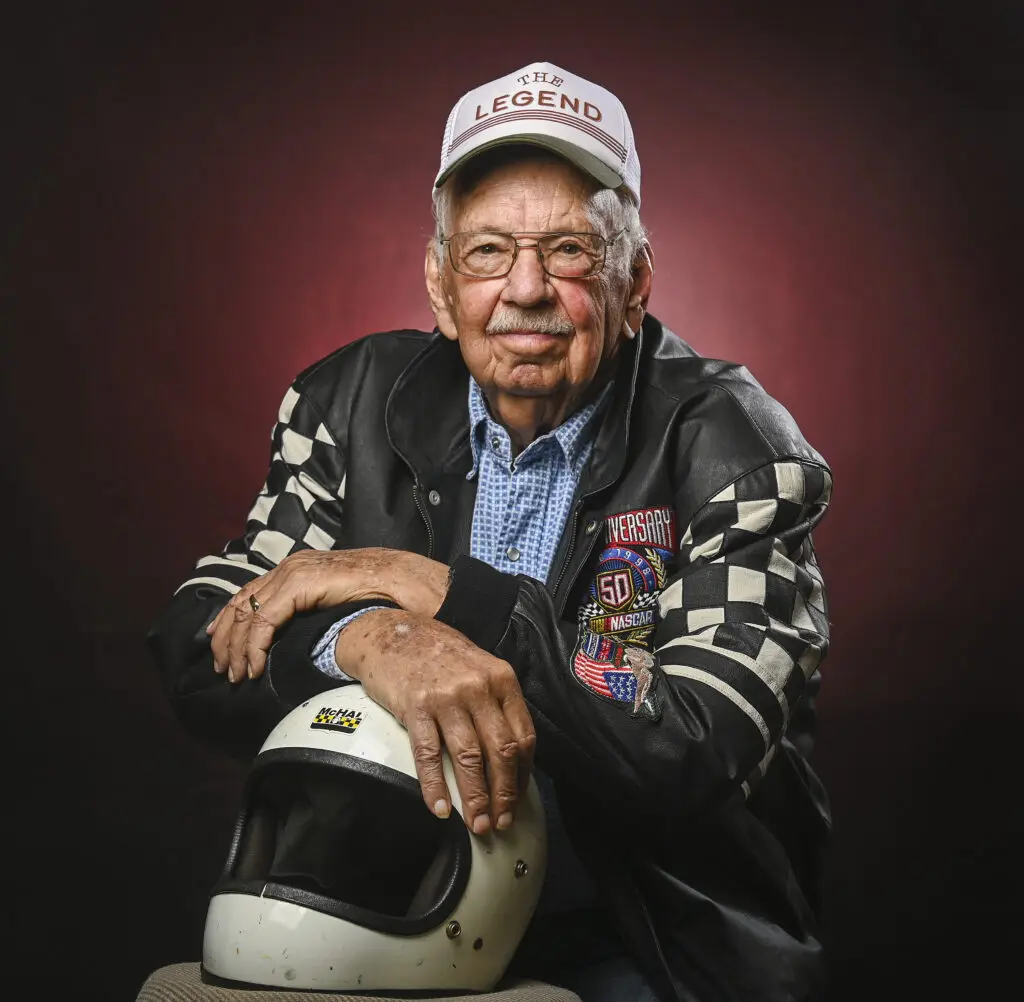
2026 INDUCTEE – RHEA GREENWELL
By Bruce McLellan
The Decatur Daily
From football to stock car racing
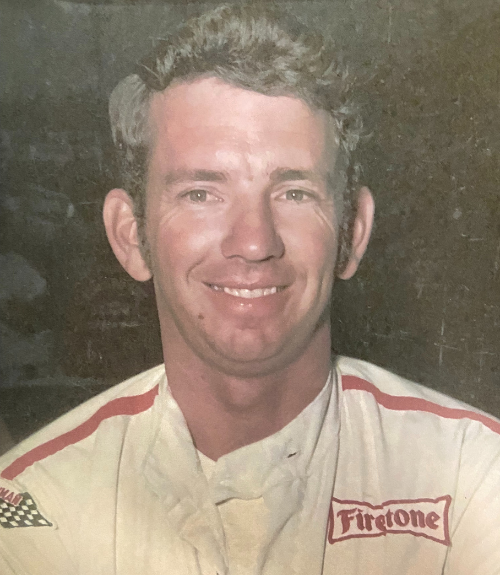
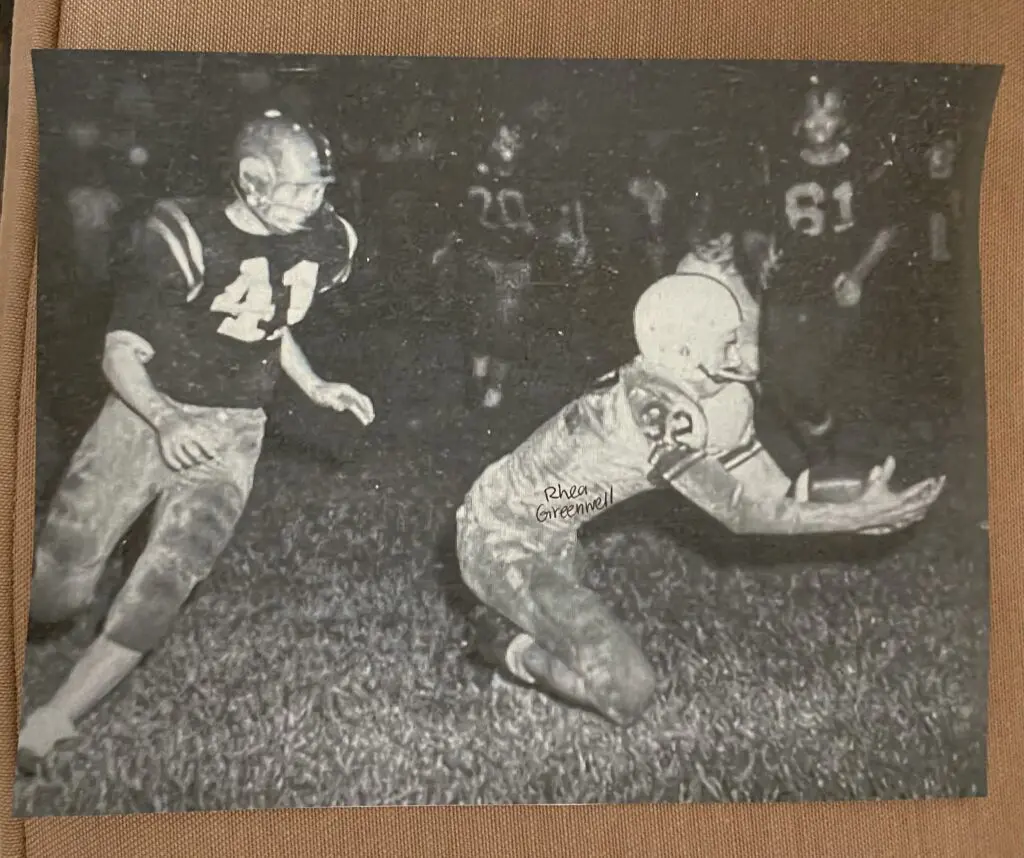
Rhea Greenwell earned selection to the state high school All-Star football game in 1958.
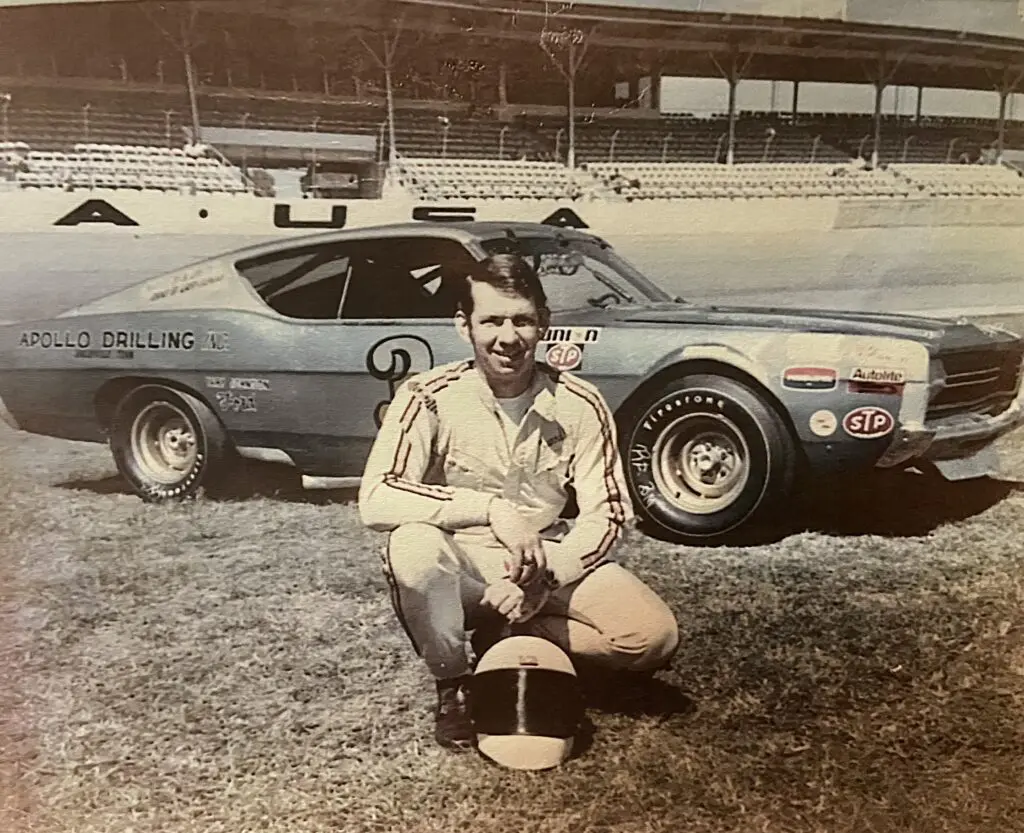
He competed in sports at Decatur High for legendary coaches Joe Jones in basketball and H.L. “Shorty” Ogle in football and track and field. In 1971, he drove in a race at Daytona International Speedway.
But perhaps Greenwell’s fondest sports memory as he prepares to enter the Morgan County Sports Hall of Fame involved a 500-lap race on Decatur’s old ⅜-mile dirt track. He won it using his ability to sense track conditions.
“It was more or less durability of the car and the method or the way the driver drove that vehicle,” he said of the October 1966 race. “After a while, the track started to rutting.”
Greenwell, now 85, said the track, located in the southeast quadrant of where I-65 and I-565 meet today, deteriorated during the race and driving through its turns felt like going over a ribbed washboard.
J. Hugh Looney, 83, of Decatur remembers watching races at the Decatur International Raceway track and said it was composed of red clay.
“This red dirt I’m talking about is like you make a brick out of,” Looney said. “It was hard, and when they got it packed down and it was later at night, it would actually squeal a tire it was so hard.”
In the 1966 race, Greenwell guided his 1933 Chevrolet sedan on the smoother spots in turns and finished several laps in front of the rest of the field.
“I was going into No. 1 (turn) and this car comes on the inside trying to get around me. He comes up beside me, and I can remember it just as well as if it was yesterday. His front end was jumping off the ground going through the rub boards. Two or three laps (later), he was in the pits tore up.”
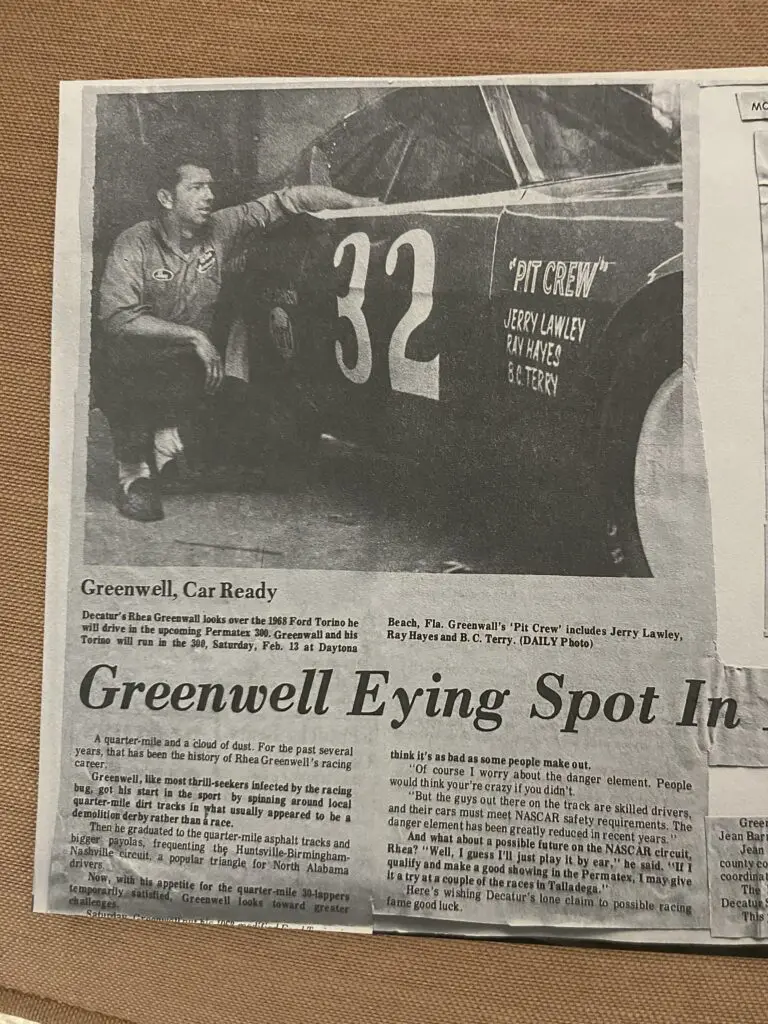
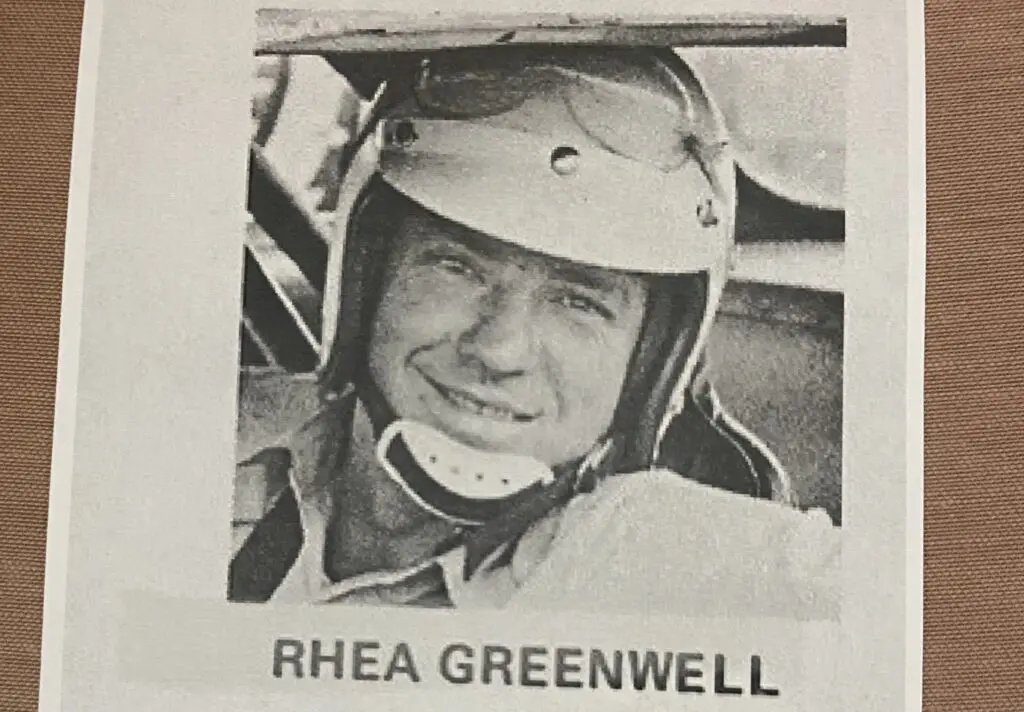
The skills that helped Greenwell win that dirt-track race helped him become a contender in races on asphalt tracks later in the 1960s. He won twice in a three-race span at Huntsville Speedway in 1968 driving a 1964 Ford Fairlane. In 1971 he finished runner-up in Alabama in the season-long NASCAR late-model sportsman points race and was third nationally.
Competing in NASCAR events throughout the South, he became friends with Hueytown-based drivers Red Farmer, Bobby Allison, Donnie Allison and Neil Bonnett, who were part of the Alabama Gang.
“We would run Huntsville on Thursday night, Birmingham on Friday night and Montgomery Saturday night,” Greenwell said. “And if there were any races Sunday somewhere, we’d go to them.”
The pinnacle of Greenwell’s racing career came in February 1971, when he competed at Daytona in the late-model sportsman series, a step below the top Grand National division, which was for newer model cars. He qualified with a speed of 150.837 mph for the 36th position in a 44-car field for the Permatex 300 at the famed 2.5-mile tri-oval with turns banked at 31 degrees.
“The first lap I ever made around that track more or less was wide open,” he said. “You don’t notice the banking. You’re running so fast that when you come off (turn) No. 2 and you look down there, turn 3 is way down yonder. And then you’re there before you realize it.”
A broken transmission knocked Greenwell’s car out after 53 laps, and he finished 33rd in the race won by Farmer. Among the drivers in front of Greenwell were Darrell Waltrip in 28th and Bobby Allison in 22nd. Harry Gant was one spot behind Greenwell, who said he wasn’t intimidated by the track’s reputation.
“I was just glad to be there,” he said. “I didn’t have any fears or any anxieties about doing it.”
Looney said he remembers that other drivers had to be cautious trying to pass Greenwell.
“He was always aggressive,” Looney said. “He would not back off. If you pulled out on him, you were going to get run over.”
Greenwell was a unique competitor who excelled in high school sports that relied on the human body as well as the sport of auto racing that involved controlling an external force. But he possessed traits that benefited him in all of his sports: toughness, a desire to win and strength.
He developed some of those skills at his family’s rock crushing business at the Trinity quarry still operated today by Vulcan Materials. He worked at the quarry in high school.
“I wanted a job that paid the most,” he said. “They had power shovels back then that you operated with levers. You had pedals that would control your bucket coming up and down and then you had these levers that would cause it to go out or come in.”
It required human force to operate the controls. The job gave him a workout in an era when athletes didn’t train year round.
“You don’t realize it’s building that upper body strength,” Greenwell said. “You may not be sitting there working out with weights, but you’re sitting there working your arms and your legs and everything all day long. It just really improved my overall body strength.”
His parents, Vernie and Mary Kathryn Greenwell, had both played basketball in Boston, Kentucky, where Rhea was born before the family moved to Alabama. He always loved sports. As a seventh-grader, he came to a meeting for students interested in joining the Decatur Red Raider football program.
“I went down there and of course I was the littlest,” Greenwell said. “Coach Ogle wanted to know what I was doing down there, and I said well I want to play football.
“He said, ‘Well, son, you’re going to have to eat some more beans and rice before you can play junior ball.’ So I had to try again a year or two later.”
Greenwell eventually joined the junior varsity and later was an end on both offense and defense for the varsity. He became a standout player as a senior.
The Decatur Daily wrote of a 20-13 over Tuscumbia’s Deshler High in 1957: “End Rhea Greenwell, who snagged three passes on one Raider drive that didn’t hit pay dirt, was perhaps the game’s defensive stickout, too. He made a couple of tackles on wide Tuscumbia sweeps that looked like they were going for the distance.”
In another game his senior season, Greenwell caught six passes from quarterback Hugh Ogle – the coach’s son – in a 19-13 victory over Florence’s Coffee High.
Greenwell said he was tall and lanky as a high school player at 6-foot-2 and about 160 pounds. But the grit required by the sport appealed to him.
“I just loved contact,” he said. “Tommy Wright was a real good friend of mine and played ball too. He and I just kind of set the tone for the team as far as toughness and meanness.”
At the end of his senior season, Greenwell was named to the North All-Star team on a line that included Tuscaloosa’s Billy Neighbors, who became captain of coach “Bear” Bryant’s first national championship team at Alabama.
Greenwell also played basketball, and in January 1958 scored 12 points in a victory over Priceville for the Decatur team coached by Jones, who had already coached Austinville High to a state championship and would later win two more at Austin High. He competed in sprints, relays, the high jump and long lump during track and field season.
The North-South All-Star game in August 1958 was Greenwell’s last football game, but his interest in auto racing was already starting to develop.
“When I was a senior in high school, my dad bought me a ’57 Chevrolet and then I proceeded to take it apart from one end to the other half a dozen times and put different camshafts in it and different pistons and different carburetion and everything.”
Greenwell became a member of the Road Rebels car club in the late 1950s and got an introduction to driving in races at Jake’s Dragstrip in Moulton. As a student at Alabama, where he earned a mechanical engineering degree, Greenwell often spent free time watching auto races in Midfield and at the Alabama State Fairgrounds in Birmingham.
Greenwell discovered that he wanted to be more than a spectator.
“I just wanted to race,” he said. “I just love competition.”
The strength developed working at the rock quarry became an asset in racing. Steering through fast turns was more physically demanding in the 1960s than it is now.
“In the old days, you had to manhandle the car,” Greenwell said. “They didn’t have power steering. You didn’t have power brakes.”
He bought a go-kart and raced it in the Alberta City community east of Tuscaloosa. He later traded the go-kart for a 1934 Chevrolet Coupe and raced it in Alberta City.
“I took it out there to the drag races and won top eliminator with it the first time I ever raced a car,” he said.
The coupe’s rear end was welded to an axle and he learned that wasn’t a good setup for racing on a round track.
“When I got back from college, I tried that car down at the Muscle Shoals (track),” he said. “Not knowing anything about racing or anything, you had to have some suspension under it. I took it down there the first night, and with the axle welded to the frame it broke loose so I couldn’t do anything with it.”
That led Greenwell to buy the 1933 sedan, which he drove successfully in modified races. He followed that by competing in the late-model sportsman division. After his successful 1971 season, he returned to Daytona in February 1972 anticipating another good year.
But while Greenwell was in Daytona, his father died in Decatur. Greenwell returned home.
“I had to quit racing and start working, tending to the family businesses,” he said.
Frances Greenwell, his wife of more than 52 years, said there was a sense of relief when he quit racing a year before they married.
“I hated he had to, but it’s a dangerous sport,” she said.
Greenwell said that if the need to take over the family business had not forced him to end his racing career, he may have enjoyed more success in the sport.
“Bobby Allison told me once that he thought if I had run the sportsman thing for NASCAR back then I could have been fairly successful because I could feel the car move in my rear end and back before the car ever actually showed any movement. If you were about to spin or something, you could catch the car before you spun.”
After his father’s death, Greenwell helped run the family stone-crushing and asphalt businesses for another decade before they were sold. Then he had jobs in sales and raising cattle, including an exotic breed called Chianina. More than 30 years ago, he started a company that installed water irrigation systems for lawns and other landscapes.
“My wife and family have always supported me in whatever I decided to do, whether it was farming, the cattle business or racing,” Greenwell said.
Although he hasn’t competed in an auto race in more than 50 years, Greenwell admits his racing instincts sometime return when he’s driving on the road.
“You don’t want anybody being in front of you. You start out trying to drive normal and next thing you know, here’s somebody comes and cuts you off … and then that ends it.”